Second Wave of Enrollment is Open Now!Sign Up Now
Mon–Fri 8:00–6:00 · Sat 10:00–3:00InstagramFacebook
The Marylebone Clinic

Neurotoxins in Toronto, ON: Botox, Dysport and Xeomin

Soften Expression Lines With Botox and Other Neurotoxins in Toronto, ON

The lines that form between the brows and across the forehead are not caused by aging skin alone. Muscles press creases into the skin thousands of times a day, and once a crease becomes permanent, no topical product reaches the cause. Reducing the movement is what addresses it.


840 Dupont St, Toronto

Quick Facts

  • Treatment Time

    15 to 30 minutes

  • Downtime & Recovery

    None to minimal

  • Results Timeline

    3 to 5 days for initial effect, full results at 10 to 14 days

  • Number of Sessions Needed

    One per treatment area

  • Treatment Frequency

    Every 3 to 4 months

The challenge is that expression is also how a face communicates, so the goal is not to eliminate movement but to reduce excess. At The Marylebone Medical Clinic in Toronto, ON, treatment is delivered within a physician-supervised medical setting that prioritizes safety, anatomical precision, and natural outcomes, guided by restraint and a long-term view of facial health rather than by how much can be treated in one visit.

Neurotoxins treatment at The Marylebone Medical Clinic

The treatment

What Are Neurotoxins?

Neurotoxins, often called Botox after the best-known brand, are injectables derived from botulinum toxin type A that temporarily reduce the activity of targeted muscles. You’ll also hear them called neuromodulators. At cosmetic doses, the effect is confined to the specific muscles injected and wears off gradually as nerve endings regenerate over several months.

They are used for two distinct purposes that are worth separating. The first is corrective, softening lines that have already formed through years of repeated expression. The second is preventative, reducing the muscle activity that creates those creases before they become permanently etched into the skin. Which one applies to you depends on how established your lines are, and it changes how conservatively we dose treatment.

The clinic offers Health Canada-approved options including Botox, Dysport, and Xeomin. All contain the same active protein and work through the same mechanism, but differ in formulation, onset, and how far they diffuse from the injection point. Product selection is based on facial anatomy, muscle dynamics, and how you have responded previously rather than a single preferred brand.


How Do Neurotoxin Treatments Work?

Neurotoxins work by blocking the release of acetylcholine, the neurotransmitter that signals a muscle to contract. When injected into a specific muscle, the product prevents that signal from arriving, so the muscle relaxes and the skin above it stops folding with every expression. Existing lines soften as the skin recovers from the constant creasing.

Placement is the whole treatment. The same product injected a few millimeters away produces a meaningfully different outcome, which is why assessment covers not just where your lines are but how your face moves to create them. Two patients with identical forehead lines may need very different injection patterns, depending on which muscles are doing the work.

Dosage is deliberately conservative. It is straightforward to add more at a two-week review, and impossible to remove what has already been placed, so starting lower and building is the approach that protects natural movement. Visible change develops gradually over three to five days, with the full effect settling at ten to fourteen days.



Benefits

Benefits of Neurotoxins in Toronto, ON

Most patients arrive wanting to look less tired or less severe rather than specifically younger, and the frown lines between the brows usually create that impression. The benefits below reflect what treatment actually changes.

  • 01

    Softens Dynamic Lines

    Reduces expression-related wrinkles by relaxing overactive muscles while preserving character and movement.

  • 02

    Supports Natural Expression

    Precise placement helps the face stay expressive rather than appearing frozen or overcorrected.

  • 03

    Preventative Aging Benefits

    Slows the deepening of dynamic lines into permanent creases when used as part of a long-term strategy.

  • 04

    Customized Product Selection

    Access to multiple neurotoxin brands allows treatment to be tailored to your anatomy and your response pattern.

  • 05

    Non-Surgical Refinement

    No incisions and minimal interruption to daily activities, with most patients returning to work immediately.

Waiting area with lounge chairs by large street-facing windows at The Marylebone Medical Clinic

Why Marylebone

Why Choose The Marylebone Medical Clinic for Neurotoxins in Toronto, ON?

Neurotoxin results depend almost entirely on placement and restraint rather than on which brand is used. The clinic’s physician-led approach to care treats dosing as a decision about your specific muscle pattern rather than a standard number of units per area.

  1. 01

    Physician-Led Injectable Care

    Treatment is delivered under the physician-led model established by co-founder Dr. Kavinder Grewal, MD, CCFP, Family Medicine. Nurse injector Angela I, RN, holds Canadian Board of Aesthetic Medicine certification in Basic and Advanced Dermal Fillers, and Dr. Chen Chen Xu, MD, CCFP, Family Medicine, provides aesthetic treatment alongside her family medicine practice.

  2. 02

    Anatomy-First Treatment Planning

    Injections follow how your face actually moves rather than a fixed dosing template applied uniformly to every patient.

  3. 03

    Access to Multiple Neurotoxin Brands

    Botox, Dysport, and Xeomin are all available, so the product suits your anatomy and response rather than what happens to be stocked.

  4. 04

    Conservative Dosing With Review

    Starting lower and adding at a two-week review protects natural movement, since it is straightforward to add and impossible to remove.

  5. 05

    Integrated Medical Care

    Aesthetic treatment sits alongside medical, wellness, and longevity services, which matters when a concern such as jaw clenching is functional as well as cosmetic.


Where it works

Areas Neurotoxins Treat

Neurotoxins are used across the face wherever muscle activity creates a line or alters a contour. The areas below are the established aesthetic applications.

Neurotoxins are also used for medical rather than aesthetic purposes in the areas below. Suitability, dosing, and whether the use falls within approved indications are all assessed individually at consultation.

Smiling middle-aged woman with blonde hair
  • 01Forehead

    Softens the horizontal lines created by raising the brows.

  • 02Glabella (Between the Brows)

    Relaxes the frown complex responsible for vertical lines and a severe resting expression.

  • 03Crow’s Feet

    Softens the fine lines radiating from the outer corners of the eyes.

  • 04Brows

    Creates a subtle lift by relaxing the muscles that pull the brow downward.

  • 05Bunny Lines (Sides of the Nose)

    Smooths the diagonal creases that appear across the nose when you smile or scrunch.

  • 06Upper Lip

    Softens fine vertical lip lines and can create a subtle outward roll of the upper lip.

  • 07Chin

    Reduces the dimpled or pebbled texture caused by an overactive mentalis muscle.

  • 08Jawline and Masseter Muscles

    Slims a widened lower face and reduces the bulk created by chronic clenching.

  • 09Neck (Platysmal Bands)

    Softens the vertical cords that become prominent in the neck with age.

  • 10Nose Tip

    Lifts a drooping nasal tip by relaxing the muscle that pulls it downward.


Candidacy

Am I a Candidate for Neurotoxin Treatment?

Good candidates are healthy adults with dynamic lines, meaning lines that appear or deepen when you move your face. A simple test is to relax your expression completely and look in a mirror. Lines that soften significantly at rest respond well to a neurotoxin, while lines that remain fully etched are static and usually need a filler or resurfacing alongside it.

Treatment also suits patients with medical concerns such as jaw clenching, teeth grinding, or excessive sweating, where the mechanism is the same but the goal is functional rather than cosmetic. Preventative treatment is reasonable for younger patients whose lines are beginning to persist after the expression has finished.

Neurotoxins are not appropriate if you are pregnant or breastfeeding, have an infection at the intended injection site, or have a neuromuscular condition such as myasthenia gravis or ALS. Certain medications, including aminoglycoside antibiotics, can amplify the effect. Your health history and current medications are reviewed at your consultation before any treatment is planned.

Black-and-white portrait of a woman's face
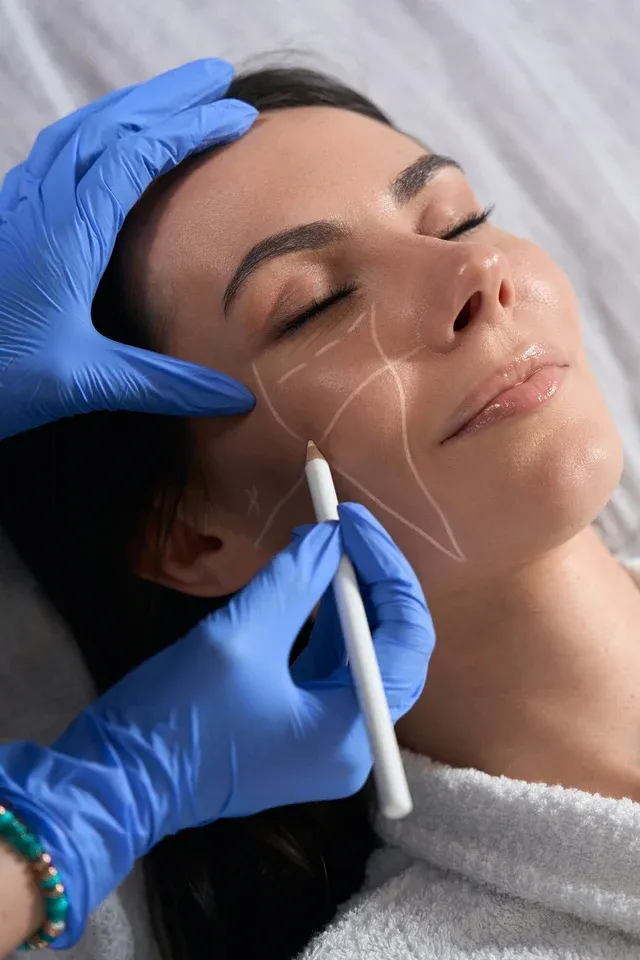
Clinician marking a woman's cheek with a white pencil before dermal filler treatment

The treatment

What to Expect During Neurotoxin Treatment

The appointment begins with an assessment of how your face moves rather than how it looks at rest. You will be asked to frown, raise your brows, and smile so the specific muscles creating your lines can be identified, since the injection pattern follows movement rather than the lines themselves.

The skin is cleansed, and the injector marks the injection points. Numbing is not usually required, though it is available, and treatment takes fifteen to thirty minutes depending on how many areas are being addressed. The needle used is very fine, and most patients describe a brief pinch at each point rather than pain.

You can return to normal activities immediately, with the main restriction being that you should stay upright and avoid rubbing the treated areas for several hours. Nothing changes on the day. Softening begins at three to five days, and the full effect settles at ten to fourteen days, which is the right time to review if you are new to treatment.


Before & after

Pre-Treatment Instructions for Neurotoxins

Preparation is minimal, and most of it is about reducing the chance of bruising at the injection points. The following applies in the days before your appointment at our Dupont Street clinic in Toronto.

  • Pause Blood-Thinning Supplements Stop fish oil, vitamin E, ginkgo, and high-dose NSAIDs for several days beforehand if your physician agrees, as these increase bruising.
  • Avoid Alcohol for 24 Hours Alcohol dilates blood vessels and makes bruising at the injection points more likely.
  • Disclose Your Medications and History Tell your provider about any neuromuscular condition, recent antibiotics, or previous neurotoxin treatment, including how you responded to it.
  • Plan Around Your Calendar Book at least two weeks before any event, since the full effect takes ten to fourteen days and any bruising needs time to resolve.
  • Arrive Without Makeup Come with clean skin so the injection points can be marked accurately and the area properly prepared.

Post-Treatment Care for Neurotoxins

Aftercare is brief, but the first few hours matter because the product needs to stay in the muscle it was placed in. These instructions apply from the moment you leave the clinic.

  • Stay Upright for Four Hours Avoid lying down, bending forward for long periods, or napping, all of which can allow the product to migrate from where it was placed.
  • Avoid Touching or Rubbing the Area Do not massage, rub, or apply pressure to the treated areas for at least twenty-four hours, including during facial cleansing.
  • Skip Exercise and Heat for 24 Hours Avoid strenuous workouts, saunas, steam rooms, and hot yoga, since increased circulation can affect placement and worsen bruising.
  • Use the Muscles Gently Actively frowning and raising the brows in the hours after treatment is often suggested to help uptake, though this varies by provider; follow the specific instructions you are given.
  • Report Any Asymmetry Promptly Contact us if you notice an uneven result or any drooping of the brow or eyelid, as these are usually straightforward to address and are far easier to manage early.

Results

How Long Do Neurotoxin Results Last?

Results typically last three to four months, after which nerve endings regenerate and muscle activity gradually returns. Duration varies with the treatment area, the dose used, and how strong the underlying muscles are, so patients with a powerful frown complex often find the glabella wears off before the crow’s feet.

Something useful happens with consistent treatment. Muscles that are regularly relaxed tend to weaken over time, which means many long-term patients find they need fewer units or can extend the interval between appointments. Treatment every three to four months is the usual rhythm, and letting the effect fully wear off before returning tends to be less effective than maintaining it.

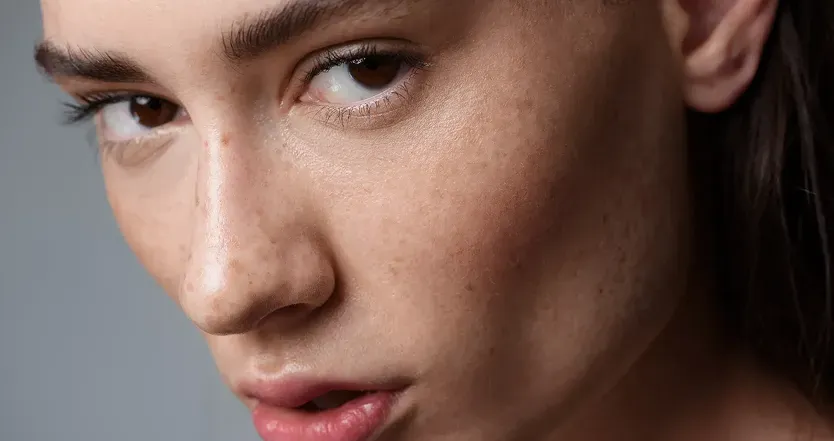
Close-up of a woman's face showing freckles and natural skin texture

Combine with

What Treatments Are Neurotoxins Best Paired With?

Neurotoxins address movement but not volume, laxity, or skin quality, which is why they are so commonly combined. The classic pairing exists because most faces have more than one of those problems at once.


How it compares

Botox vs Dysport vs Xeomin: How They Compare

All three contain botulinum toxin type A and work the same way. The differences are practical, and they’re what make one a better fit for a particular area.

BotoxDysportXeomin
OnsetInitial results often within 3 to 7 daysOften within 2 to 3 daysSoftening begins in 3 to 4 days
Full effect10 to 14 days10 to 14 days10 to 14 days
Spread from the injection pointContained and preciseSlightly broaderContained, comparable to Botox
FormulationContains accessory proteinsSmaller accessory protein complexes; contains cow’s milk proteinNo complexing proteins; contains human albumin as a stabilizer
Typical duration3 to 4 months3 to 4 months3 to 4 months
Often chosen forMost areas, especially where precision mattersLarger, flatter areas such as the foreheadWhen response to another neurotoxin has diminished

Meet the team

Clinical leadership at the core of Marylebone

Your health is overseen by doctors who understand your history and guide decisions with long-term perspective.

Dr. Kavinder Grewal, Co-Founder and CEO at The Marylebone Medical Clinic

Co-Founder and CEO

Dr. Kavinder Grewal

MD, CCFP, Family Medicine

Family physician focused on preventive and longevity medicine, and on long-term relationships with his patients.

Dr. Gurdeep Grewal, Co-Founder and Chief Strategy Officer at The Marylebone Medical Clinic

Co-Founder and Chief Strategy Officer

Dr. Gurdeep Grewal

BDS, M.Clin Dent, M(Orth)

Co-founder; shapes the clinic’s brand and patient experience.

Katherine Mahmoud, Nurse Injector at The Marylebone Medical Clinic

Nurse Injector

Katherine Mahmoud

RN

Acute and critical care nursing, with advanced training in medical aesthetics since 2018.

Angela I, Nurse Injector at The Marylebone Medical Clinic

Nurse Injector

Angela I

RN

Certified through the Canadian Board of Aesthetic Medicine in neuromodulators, fillers, PRP and IV therapy.


In detail

Movement Is Worth Keeping, Excess Is Not

The difference between a good neurotoxin result and an obvious one is almost entirely a matter of how conservatively it is dosed and how well the injector reads your particular muscle pattern. That assessment happens in person, watching your face move, rather than from a chart of standard injection points.

The Marylebone Medical Clinic sees patients from across central Toronto and the surrounding neighborhoods, and treatment can be arranged per session or within one of the Aesthetic Collection memberships. Call or text 647-932-2002, or reach us through our contact page to begin. We are located at 840 Dupont St, Toronto, Ontario M6G 0B9, Canada, open Monday to Friday from 8:00 AM to 6:00 PM and Saturday from 10:00 AM to 3:00 PM.

Botox Pricing at The Marylebone Medical Clinic

Treatment areaPhysicianNurse
Frown lines$280$200
Forehead lines$140$100
Crow's feet$280$200
Upper face (all three)$700$500
Lip flip$70$50
Bunny lines$70$50
Chin$140$100
Jaw (masseter)$700$500
Neck bands$560$400

All treatments include a consultation and a two-week review. $150 minimum per visit.
*Areas are based on set treatment criteria and doses, if a patient requires more then we will charge $10/unit for nurse and $14 for physician.

Botox, Dysport and Xeomin: Which Neurotoxin Is Right for You?

All three relax the muscles behind expression lines, and results from each typically last three to four months. They differ in how quickly they start, how far they spread from each injection point, and what else is in the vial.

Which one suits you is decided at your consultation, based on the area you’re treating and how you’ve responded before. Here’s how they differ.

Botox

Botox is a long-established neurotoxin, known for precise, predictable placement. It suits most treatment areas, particularly where precision matters, such as around the eyes and brows.

Dysport

Dysport is a neurotoxin derived from botulinum toxin type A. It carries smaller accessory protein complexes than some alternatives, so it spreads over a slightly wider area once it’s injected. That’s why it’s often chosen for larger, flatter muscles such as the forehead.

Dysport contains cow’s milk protein, so it isn’t suitable if you have a cow’s milk protein allergy. We ask about allergies before any treatment.

  • Slightly faster onset initial softening is often visible within two to three days, a day or two ahead of most alternatives.
  • Even coverage across broad areas the wider spread suits larger muscles, giving a smooth result with fewer injection points.

Xeomin

Xeomin is filtered to leave only the active neurotoxin, without the accessory proteins found in other formulations.

If your treatment has stopped working as well as it used to, we review your dose, timing, and technique first, because switching products only helps when the product was the cause.

  • Formulated without complexing proteins those accessory proteins are what the body is most likely to recognize as foreign, and Xeomin doesn’t contain them.
  • An option when response has diminished it’s commonly considered if another neurotoxin has gradually become less effective over years of treatment.

Questions

Frequently Asked Questions

Is anesthesia or numbing required for neurotoxin treatment?

Numbing is not usually required, as the needle used is very fine and each injection takes only a second. A topical numbing cream is available if you would prefer it, particularly for more sensitive areas such as the upper lip. Most patients describe the sensation as a brief pinch and manage comfortably without anything.

How much do Botox and other neurotoxins cost in Toronto, ON?

Neurotoxins are priced per unit in CAD, and the number of units depends on which areas you are treating and how strong the underlying muscles are. A frown complex in a patient with strong muscle activity requires considerably more than the same area in someone with weaker movement, so a per-area figure is misleading. Pricing is quoted at consultation once your plan is mapped.

The Aesthetic Collection memberships include neuromodulator allowances within a monthly structure. Refinement at $129 per month includes up to 40 units per year, Executive Facial Optimization at $269 includes up to 60 units, and Founder’s Circle at $469 includes up to 80 units, each with preferred pricing on additional treatment. Memberships are limited and offered by application, and whether one makes sense depends on how consistently you treat.

How are neurotoxin candidates screened?

Every treatment starts with a review of your health history and the possible side effects. The doses used cosmetically are very small and act only in the muscles injected. The risks that do exist relate to placement rather than the product, which is why anatomical knowledge matters more than any other factor.

What are the immediate versus long-term results for neurotoxins?

There is no immediate result, which surprises first-time patients. Softening begins at three to five days as the product takes effect, and the full result settles at ten to fourteen days, which is when a review appointment is most useful. Over the longer term, patients who treat consistently often find that the muscles weaken, meaning fewer units are needed, or the interval between appointments can be extended.

Are there any side effects from neurotoxins?

The common effects are mild and short-lived, including small bruises, tenderness, or minor swelling at the injection points, and occasionally a temporary headache in the first day or two. Less common effects such as brow or eyelid droop result from product migrating beyond the intended muscle, which is why staying upright and avoiding rubbing for the first few hours matters. These resolve on their own as the effect wears off, and should be reported so they can be assessed.

What is the difference between Botox, Dysport, and Xeomin?

All three contain botulinum toxin type A and relax muscles by the same mechanism, so the differences are practical rather than fundamental. Dysport tends to take effect a day or two faster and diffuses slightly more broadly, which can suit larger flat areas like the forehead. Xeomin is formulated without the accessory proteins the others contain, which is sometimes preferred by patients concerned about developing resistance. Importantly, units are not interchangeable between products, so a higher unit count for one does not indicate a stronger treatment. Which one suits you is decided at consultation based on the area and how you have responded previously.

Can neurotoxins be used preventatively?

Yes, and there is reasonable logic to it. Dynamic lines become permanent when repeated muscle contraction creases the skin in the same place over years, so reducing that contraction earlier can delay the point at which a line becomes fixed. Whether it makes sense for you depends on how expressive your face is and whether lines are already persisting after the expression has finished, which is worth an honest conversation rather than a blanket recommendation.

How often can neurotoxin treatments be repeated?

Sessions are commonly spaced three to four months apart, which reflects how long the effect lasts. Treating substantially more frequently is discouraged, as it offers little additional benefit and may increase the likelihood of developing antibodies over time. Many long-term patients find they can extend the interval as the treated muscles gradually weaken with consistent use.

Who is a good candidate for neurotoxin treatment?

Good candidates are healthy adults with dynamic lines that soften when the face is relaxed, as well as patients seeking treatment for jaw clenching, teeth grinding, or excessive sweating. Lines that remain fully etched at rest are static and usually need a filler or resurfacing treatment alongside a neurotoxin. Candidacy is confirmed at consultation, where your health history, medications, and any neuromuscular conditions are reviewed.

What should I avoid before and after neurotoxin treatment?

Before treatment, avoid blood-thinning supplements such as fish oil and vitamin E for several days if your physician agrees, and skip alcohol for twenty-four hours, since both increase bruising. Afterward, stay upright for four hours, avoid touching or rubbing the treated areas for a day, and skip strenuous exercise, saunas, and hot yoga for twenty-four hours. Full instructions appear in the pre-treatment and post-treatment sections above.

Is Dysport different from Botox?

Both are neurotoxins derived from botulinum toxin type A, and both work the same way, so the differences are practical. Dysport spreads over a slightly wider area and often takes effect a day or two sooner, which suits broader areas such as the forehead. Neither is better in the abstract: the choice depends on your anatomy, the area, and how you’ve responded before.

How many units of Dysport will I need?

Dysport unit counts run higher than Botox, because the two are dosed on different scales: roughly two to three Dysport units correspond to one Botox unit. A higher number doesn’t mean a stronger or more expensive treatment. Your count is set at your assessment, based on the areas and your muscle strength, and you’ll know it before treatment begins.

Can Xeomin be used if Botox has stopped working for me?

It’s the most common reason Xeomin is considered. A small number of people treated regularly over years find the effect wearing off sooner, and one recognized cause is an immune response to the complexing proteins Xeomin doesn’t contain. Reduced response can also come from dosing, timing, or technique, so we work out which applies to you first.

Does Xeomin contain human albumin?

Yes. Xeomin contains human albumin as a stabilizing agent, which is standard across many injectable medications. That’s different from the complexing proteins Xeomin doesn’t contain. Being free of complexing proteins isn’t the same as containing nothing besides the active neurotoxin.

Visit the clinic

Begin a conversation about your long-term health

647-932-2002 ·  840 Dupont St, Toronto, Ontario M6G 0B9, Canada

Mon–Fri 8:00 AM – 6:00 PM · Sat 10:00 AM – 3:00 PM · Closed Sunday